

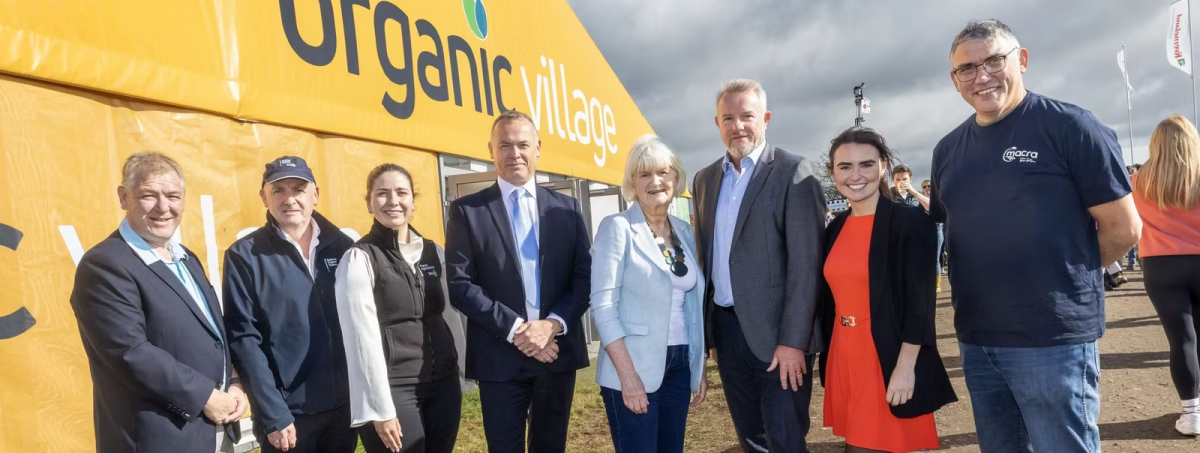
Skillnet Ireland has used the National Ploughing Championships to promote its government-funded upskilling supports to farmers and agri-food businesses, giving HR and learning and development functions in the sector a funded route to close skills gaps in digital transformation, environmental stewardship and farm management without committing internal training budget.
Skillnet Ireland, established in 1999 and funded from the National Training Fund through the Department of Further and Higher Education, Research, Innovation and Science, is the national agency for workforce learning, delivering training through 68 sector-specific Skillnet Business Networks, including Farm Business Skillnet, ICOS Skillnet, Macra Agricultural Skillnet, National Organic Training Skillnet and XLVets Ireland Skillnet.
The strategic logic ties public skills funding directly to sector competitiveness rather than treating training as a discretionary cost for individual farm businesses. Mark Jordan, chief executive of Skillnet Ireland, said the network helps enterprises build the capabilities to innovate, improve productivity and respond to the challenges of the green and digital transitions, positioning skills investment as central to the sector's future resilience.
Across agriculture, Skillnet's most recent figures show more than 6,000 farm businesses and 9,750 trainees engaged with its programmes, delivering more than 47,000 training days, within a wider portfolio of over 23,000 businesses and more than 84,500 people trained across the Irish economy. The model operates on joint investment, with businesses combining a government grant with their own contribution to reduce training costs.
Minister of State Marian Harkin described Ireland's farming and agri-food sector as a cornerstone of the economy and a vital source of rural employment, adding that available courses span artificial intelligence, financial management, organics and succession planning, developed with farmers and food producers in mind.
For the sector, the case signals that publicly funded, sector-specific upskilling networks are becoming an established route for HR and L&D functions in traditionally under-resourced industries to access structured training without direct budget commitment, a model likely to be referenced as digital and green-transition skills gaps widen elsewhere.
Source: Agriland












.png)