

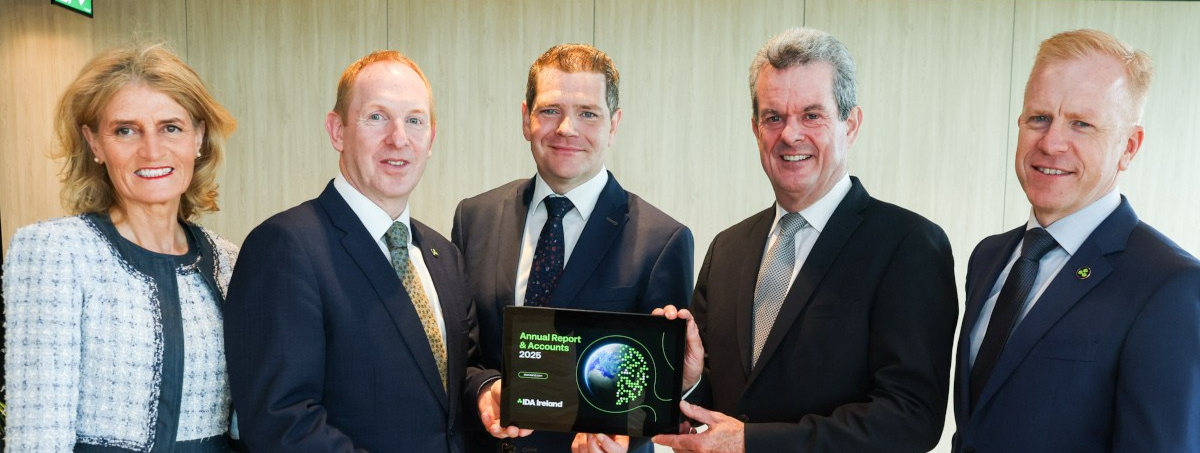
IDA Ireland has reported 190 investment deals in the first half of 2026, with commitments for nearly 10,500 jobs across technology, life sciences, fintech, and engineering, in a result that significantly tightens the competition for specialist talent across the Irish labour market.
Silicon Republic reported that among the 190 investors, 54 are first-time entrants to Ireland, while close to 40 companies expanded their existing operations. Investment activity in H1 2026 is running at a faster pace than the full-year 2025 figure, when IDA supported 323 investments with commitments for more than 15,000 jobs.
AI-related investments featured prominently, with Anthropic announcing 200 jobs as part of its Dublin expansion, and Rippling opening a new Dublin office to create 150 jobs to meet demand for AI-native workforce intelligence across EMEA. MongoDB also announced 200 jobs alongside a multimillion-dollar push toward agentic AI applications.
Fintech activity was particularly strong, with investments from Currenxie, Monzo, CoinJar, and Qashio, which IDA said reflected Ireland's strength in digital finance. Trading 212 and Block also selected Ireland as their European launchpad during the period.
Regional investment was also notable, with 52 per cent of total investments classified as regional projects. Novo Nordisk committed €432 million to expand manufacturing capacity in Athlone, while Qualcomm invested €125 million to develop its Cork site further.
Michael Lohan, CEO of IDA Ireland, said the H1 results demonstrate sustained confidence in Ireland's FDI proposition. He said: "The breadth of investment across technology, life sciences, engineering and financial services sectors, alongside strong regional performance and significant transformational undertakings, reflects the depth of Ireland's talent, capability and enterprise ecosystem. Our focus remains on competing strongly for the next generation of investment and ensuring FDI continues to deliver impact across all regions for the Irish economy."
For HR practitioners and talent acquisition teams, the concentration of high-skilled roles across AI, fintech, life sciences, and engineering in both Dublin and regional locations places acute pressure on candidate pipelines. The simultaneous entry of 54 new employers into the Irish market, each requiring rapid hiring across specialised functions, compounds an already competitive environment for sourcing, attracting, and retaining skilled workers at scale.









.png)